family of 1 font from Filmotype


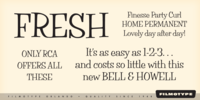
Filmotype Rose was among the company’s earliest original serif styles introduced by Filmotype in the early-to-mid 1950s. This wonderful wide serif style was inspired by the art deco movement of the 1930s.
family of 1 font from Filmotype
Filmotype Rose was among the company’s earliest original serif styles introduced by Filmotype in the early-to-mid 1950s. This wonderful wide serif style was inspired by the art deco movement of the 1930s.

Introduced by Filmotype in the early 1950s, Filmotype Leader was inspired by speedy sho-card bold lettering styles prominently featured in automotive advertising and editorial designs of the late 1940s and early 1950s to express speed and urgency.
Remastered and expanded with exacting precision from the original filmstrips, Filmotype Leader includes a full international character compliment, automatic fractionals, ordinals, and a suite of alternates in dynamic OpenType format for a smooth connecting look.

Originally released in the late 1950s, Filmotype expanded it’s Free Style typeface category with the introduction of Melody, an offbeat Googie era doo-wop typeface which was most frequently associated with music and entertainment lettering styles throughout the last 1950s and early 1960s just as Elvis and the Beatles were making the scene.
To expand the versatility of this wonderful typeface, designer Rian Hughes developed and remastered new condensed and expanded versions of Melody called Melon and Mellow respectively.
Each weight of the Filmotype Melody family was developed from the original font filmstrips and includes a full international character compliment, automatic fractionals, ordinals, and a host of alternate characters in dynamic OpenType format.
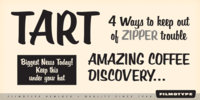
Introduced by Filmotype in the early-to-mid 1950s, Filmotype Hemlock owes its origins to classic sign painter sho-card lettering popular in the late 1940s through the 1950s. This thick upright script was among Filmotype’s most popular brush script style typefaces and saw use in window signage, store spectaculars and periodical advertising.
Filmotype Hemlock was developed from the original font filmstrips and includes a full international character compliment, automatic fractionals, ordinals, and a gigantic compliment of alternate characters and ligatures creating a genuine connecting hand painted look in dynamic OpenType format.

Originally released in the late 1950s, Filmotype expanded it’s Free Style typeface category with the introduction of Melody, an offbeat Googie era doo-wop typeface which was most frequently associated with music and entertainment lettering styles throughout the last 1950s and early 1960s just as Elvis and the Beatles were making the scene.
To expand the versatility of this wonderful typeface, designer Rian Hughes developed and remastered new condensed and expanded versions of Melody called Melon and Mellow respectively.
Each weight of the Filmotype Melody family was developed from the original font filmstrips and includes a full international character compliment, automatic fractionals, ordinals, and a host of alternate characters in dynamic OpenType format.

Originally released in the late 1950s, Filmotype expanded it’s Free Style typeface category with the introduction of Melody, an offbeat Googie era doo-wop typeface which was most frequently associated with music and entertainment lettering styles throughout the last 1950s and early 1960s just as Elvis and the Beatles were making the scene.
To expand the versatility of this wonderful typeface, designer Rian Hughes developed and remastered new condensed and expanded versions of Melody called Melon and Mellow respectively.
Each weight of the Filmotype Melody family was developed from the original font filmstrips and includes a full international character compliment, automatic fractionals, ordinals, and a host of alternate characters in dynamic OpenType format.
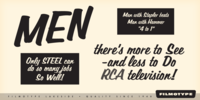
Originally offered by Filmotype in the early 1950s, Filmotype Lakeside was among its earliest informal style brush script typefaces inspired by sign painter classic brush script styles.
Filmotype Lakeside was developed from the original font filmstrips and includes a full international character compliment, automatic fractions, ordinals, with a complete set of alternate characters and ligatures to allow flawless typesetting in dynamic OpenType format.
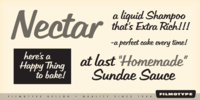
Released by Filmotype in the late 1950s, Filmotype Kellog expanded its Scripts category with this informal style brush script inspired by sign painter classic brush script styles and expanded to allow a wider line setting.
Filmotype Kellog was developed from the original font filmstrips and includes a full international character compliment, automatic fractions, ordinals, with a complete set of alternate characters and ligatures to allow flawless typesetting in dynamic OpenType format.
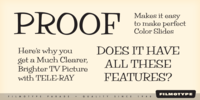
Introduced by Filmotype in 1955, Filmotype Parade was released to compliment its slimmer cousin Filmotype Orlando and afford Filmotype’s customers the ability to set the same playful casual look in an extra wide setting.
This Free Style typeface captures a relaxed casual sho-card lettering style popular in grocery store and auto dealership advertising of the mid-1950s.
Type designer Charles Gibbons expanded and developed a full range of styles based on exploring a variety of useful width variations.
While it had been Filmotype’s practice to generate width variant typefaces using camera stretching techniques, Gibbons instead mastered each alphabet at its native width and expanded weights to create exceptional typesetting throughout the family.
More…
Originally released in 1955, Filmotype Orlando was one of Filmotype’s most successful Free Style typefaces based on its loose casual sho-card lettering style which peaked in popularity during the mid-1950s.
Remastered and expanded with exacting precision from the original filmstrips, Filmotype Orlando includes a full international character compliment, automatic fractions, ordinals, and a suite of alternates in dynamic OpenType format.


